- Published on
Web Application Architectures and Rendering Strategies in 2025
- Authors

- Name
- Mohamed Aziz Karoui
- @maiko26_
In a recent article about the modern ways to create a React app, I discussed different frameworks and how to use each optimally based on the chosen web architecture—each with its own pros, cons, and use cases.
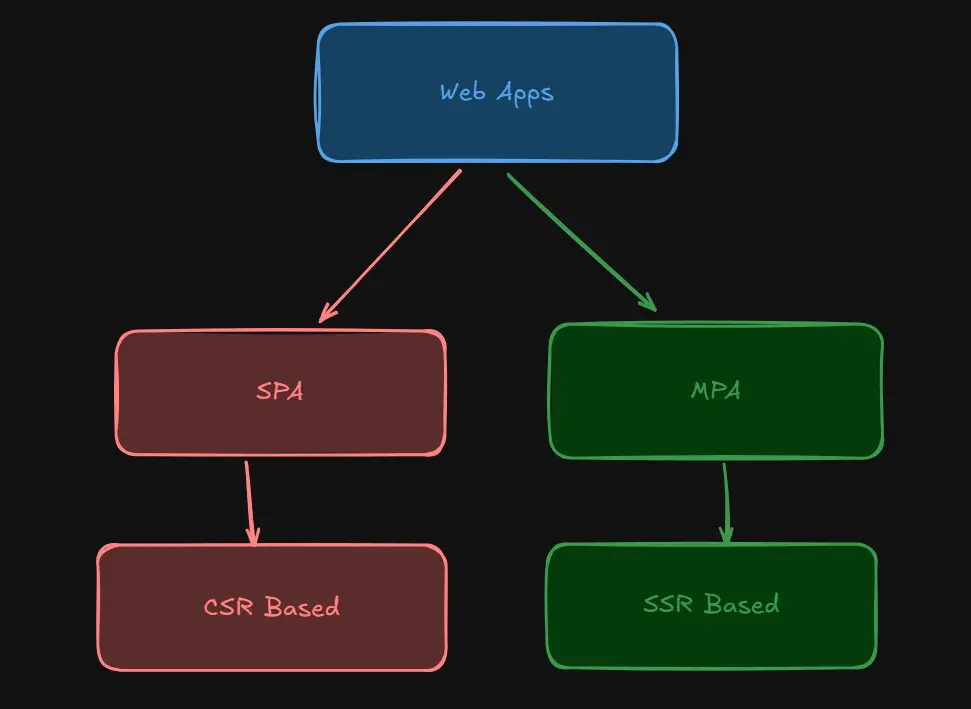
Today, I want to break it down further. People often conflate Web Architectures and Rendering Strategies. Web Architectures refer to the broad structure of how an app behaves—primarily how routing is handled—while Rendering Strategies are about how the content of each page is generated and delivered.
The two most common architectures are:
Now, what is the difference between these two architectures?
SPAs are often used interchangeably with CSR (Client-Side Rendering) because the client downloads the necessary JavaScript and handles most of the compute and rendering. This approach provides a seamless, native-like experience without the constant back-and-forth with the server. Frameworks like React, Angular, Vue, Solid, and Svelte are commonly used to build SPAs.
MPAs represent the traditional way of building websites and apps, where the server is responsible for computing and rendering the content. Each time the user navigates, the server sends a fully rendered HTML page ready for interaction. This architecture is common in platforms like WordPress, Shopify, and even in modern meta-frameworks (e.g., Next.js, Astro, Solidstart, SvelteKit) when used in a traditional MPA mode.
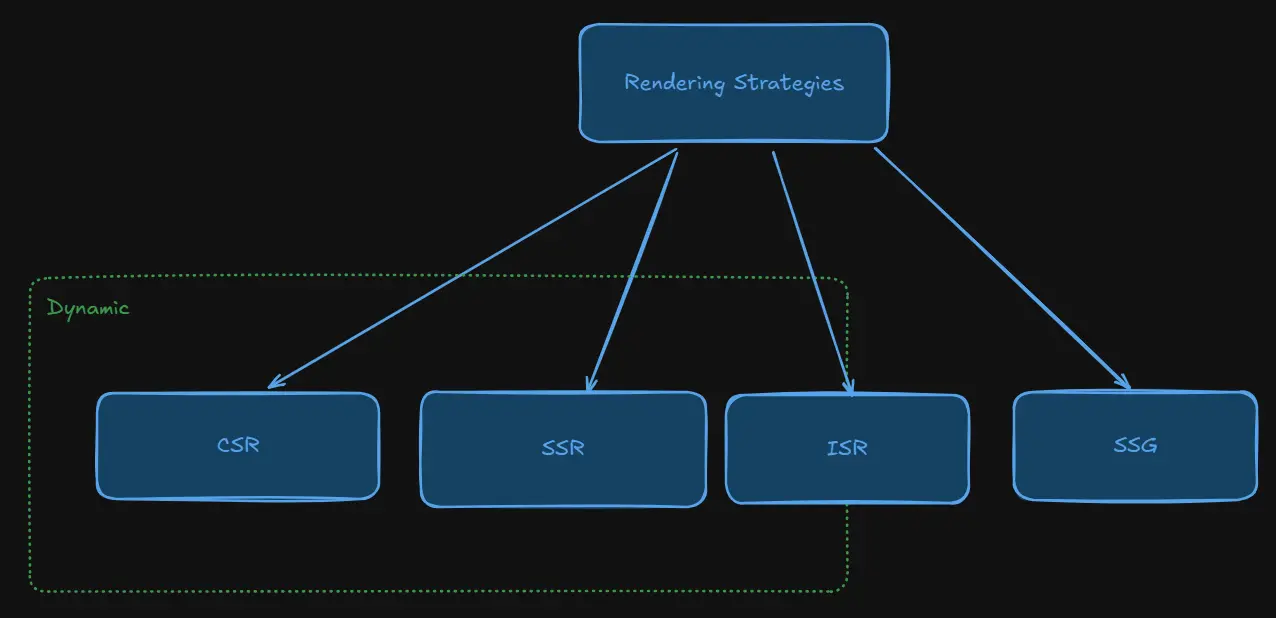
There are four popular rendering strategies in 2025—along with many hybrids and combinations—that you can use depending on your needs:
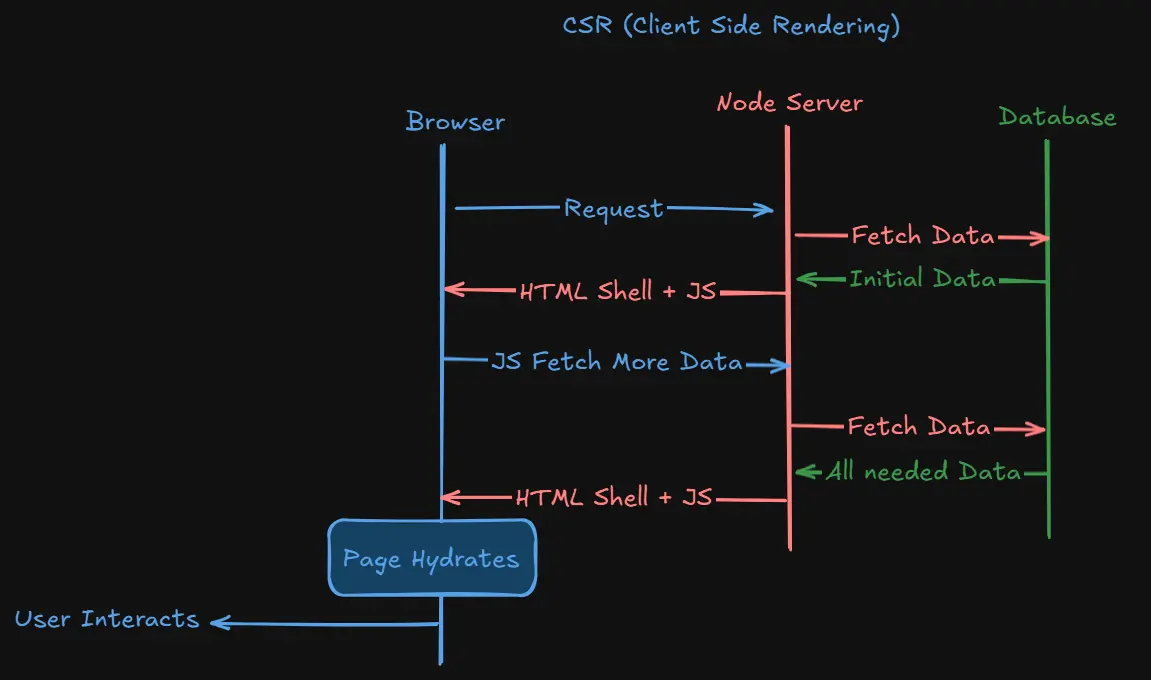
CSR works by sending the user a basic HTML shell along with JavaScript. Once the JS is executed, it fetches additional data to render the page. While this provides a highly interactive experience—making it great for social media apps and dashboards—it comes with a slow initial load and poor SEO since web crawlers only see the empty shell at first.
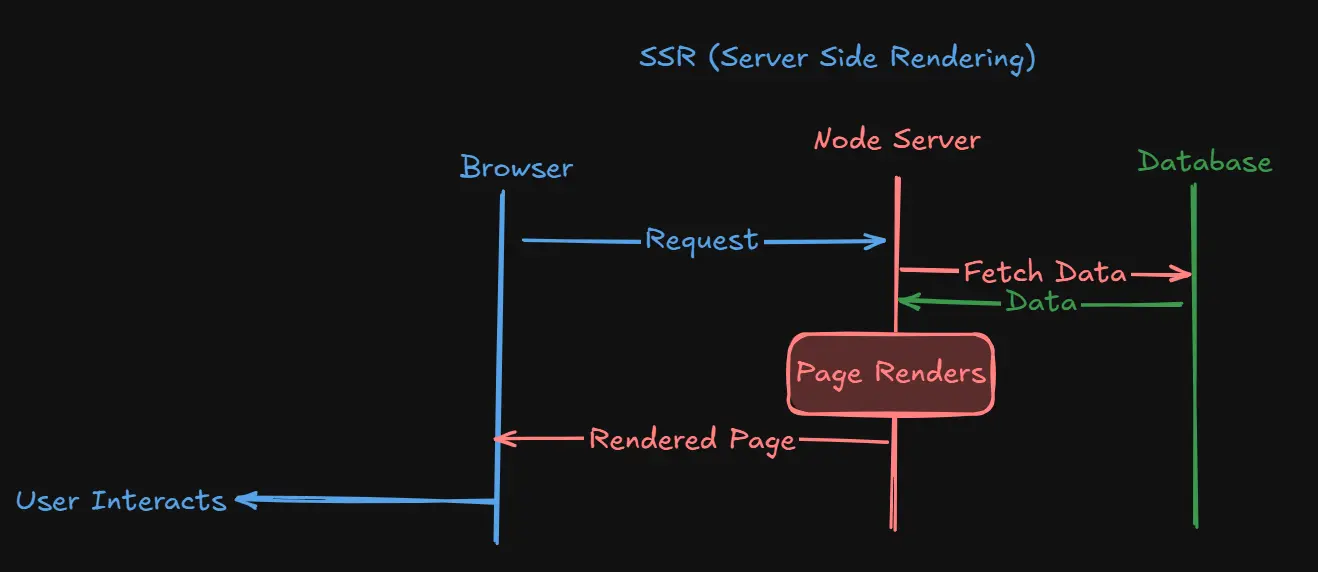
SSR generates the full HTML page on each request. The server fetches data from the database, renders the page, and sends it to the user. This results in a fast initial load and excellent SEO since web crawlers receive fully rendered pages. With advancements like pre-fetching and caching in modern meta-frameworks, SSR can offer performance close to that of CSR while still providing dynamic content.
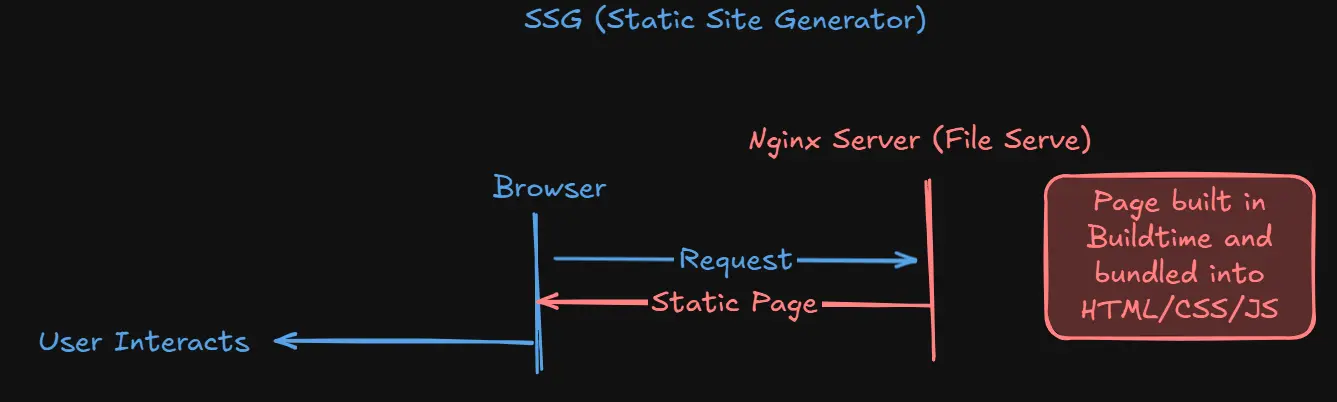
SSG builds your pages at build time, generating static HTML files that are ready to serve instantly. This method offers outstanding performance and SEO benefits since the content is already rendered. However, because the pages are static, they only update when you rebuild and redeploy the site—a good choice for content-driven websites that change infrequently.
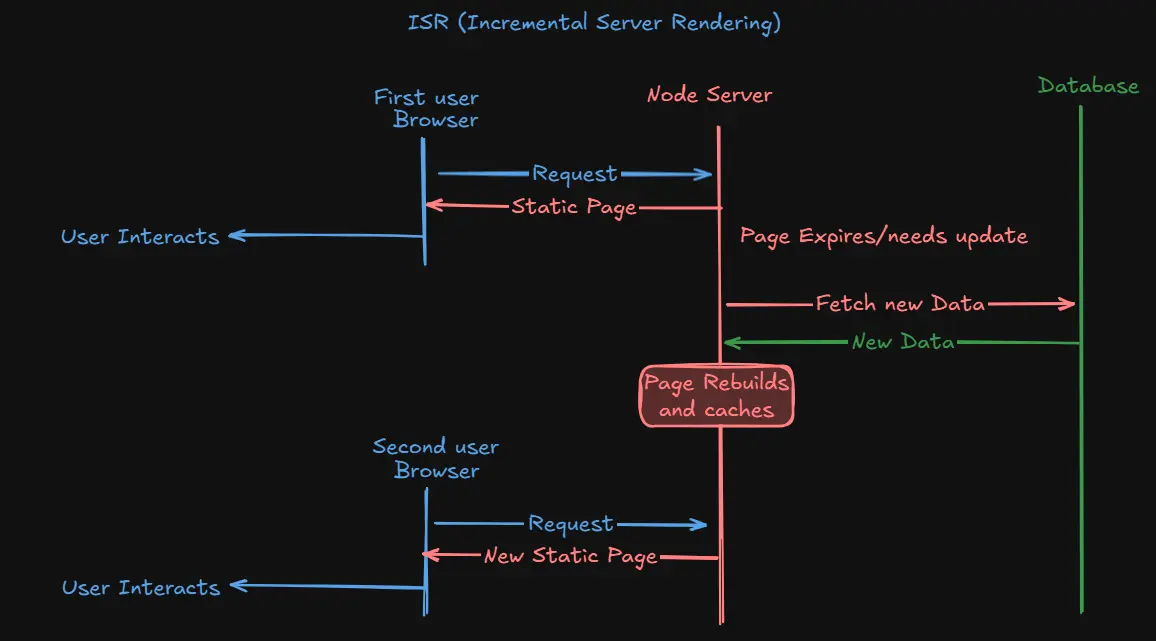
ISR is a hybrid approach that combines the speed of SSG with the dynamism of SSR. On the first request, the server sends a cached, pre-built page. In the background, it checks if the content has changed (or if a set time has expired) and, if so, rebuilds the page. This ensures subsequent users receive updated content with the performance benefits of static pages. Tools like Next.js and Astro support ISR, as do other frameworks like SvelteKit and SolidStart.
Each architecture and rendering strategy has its own advantages and trade-offs. Here’s a quick overview to help you decide which might work best for your project:
| Strategy | Pros | Cons | Best For |
|---|---|---|---|
| CSR | Highly interactive; rich user experience | Slow initial load; poor SEO without additional measures | Social media apps, dashboards |
| SSR | Excellent SEO; fast initial load | Higher server load; potentially slower interactions on subsequent requests | News sites, e-commerce, content-rich platforms |
| SSG | Blazing fast; great SEO; minimal server load | Static content; requires rebuilds for updates | Blogs, portfolios, documentation sites |
| ISR | Combines static speed with dynamic updates | Slightly more complex setup; framework-specific | Hybrid sites like e-commerce, frequently updated blogs |
As we move further into 2025, additional trends are emerging:
Understanding the distinction between Web Architectures (SPA vs. MPA) and Rendering Strategies (CSR, SSR, SSG, ISR) is key to choosing the right approach for your project. Each offers unique advantages depending on your priorities—be it interactivity, SEO, performance, or the ability to update dynamic content. As new technologies emerge, staying informed and flexible with these approaches will continue to be vital for modern web development.